Third-Party Retail

The Commercial Reality: Why Marketplaces Threaten or Fuel Your ROI
- Third-party platforms can become revenue leaks if unmanaged.
- Uniform branding is required across every retail touchpoint.
- Inconsistent product data and rogue variants dilute algorithmic score.
- Legal and compliance issues now affect marketplace SEO and AEO.
- Protecting legal integrity is mandatory for low-cost organic visibility.

Market Performance Data: The 5-Year Retail Shift
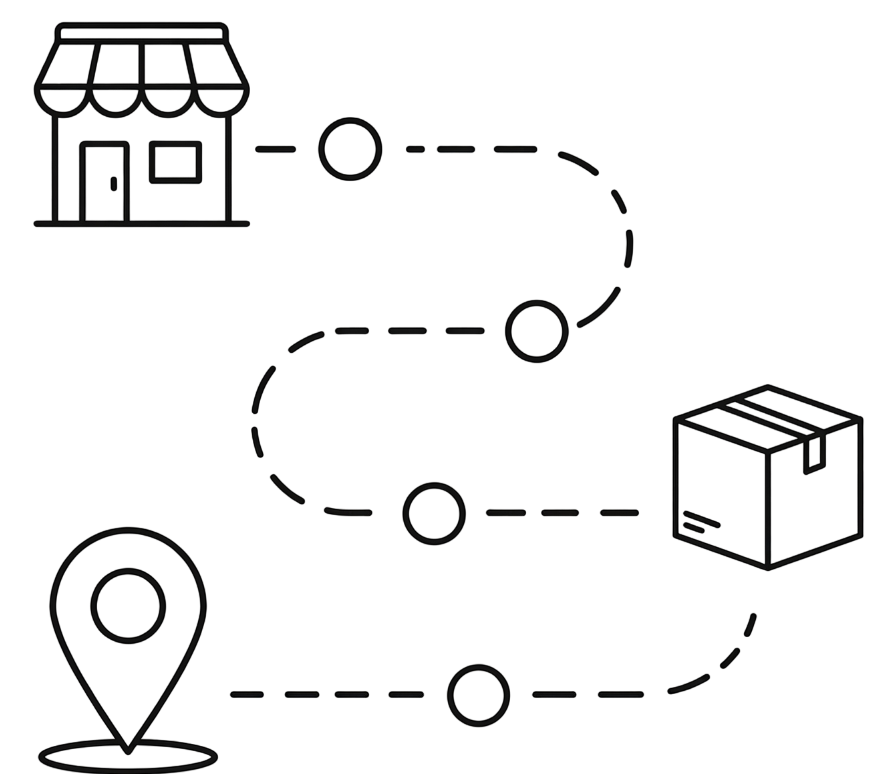
- 56% of product searches now originate inside retail platforms.
- Amazon: 310M+ active buyers and $1.75B in daily sales volume.
- Walmart marketplace accounts for 6.4% of total US e-commerce volume.
Architectural Pillars of Our ROI-Driven Retail Solutions
-
High-Yield Retail-Search Signaling
Optimize titles, attributes, and metadata to win high-intent searches. -
Answer Engine Optimization (AEO) on Retail Platforms
Own the answers, FAQs, Q&A, and specs to capture zero-click demand. -
Absolute Visual & Policy Governance
Enforce brand, content, and policy standards across every SKU and seller.
Brand protection + policy compliance = compounding organic ROI.
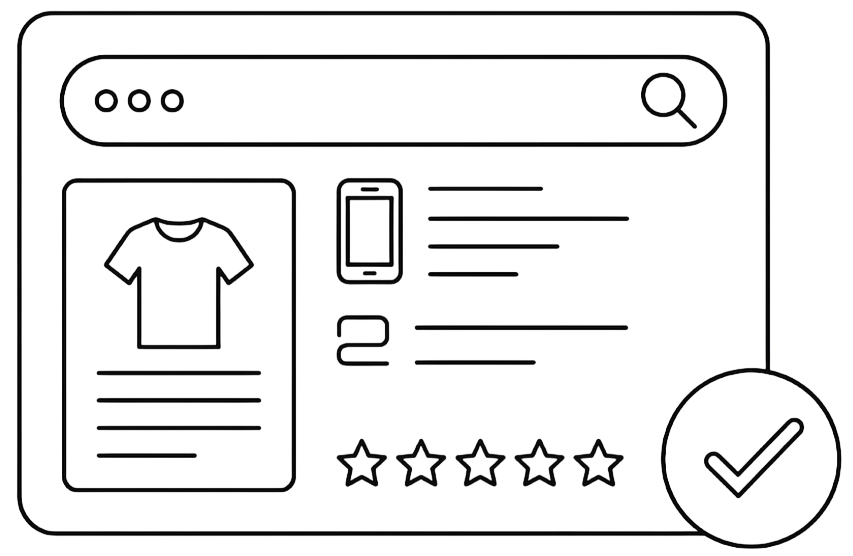
Maximizing the “Time to Transact” Asset
-
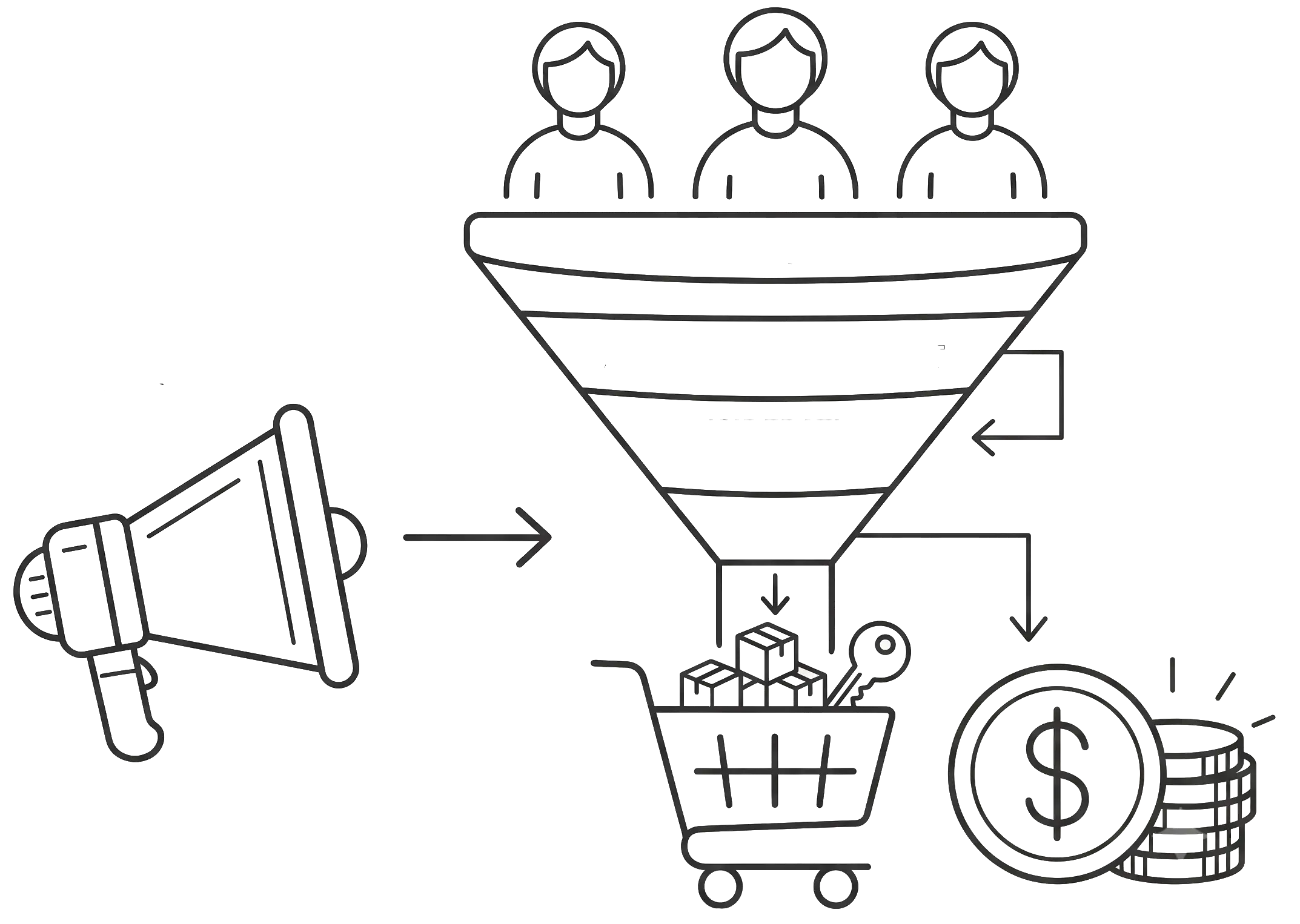
Discover
Be found through retail search, categories, recommendations, voice commands, and conversational AI assistants. -
Engage
Deliver rich, compliant content that builds trust, answers buyer questions, and keeps the shopper moving. -
Serve
Enforce brand, content, and policy standards across every SKU and seller. -
Influence
Earn reviews, share of voice, social proof, and repeat purchases that fuel the next cycle of organic discovery.
Verifiable Financial Metrics: ROI In Action
-
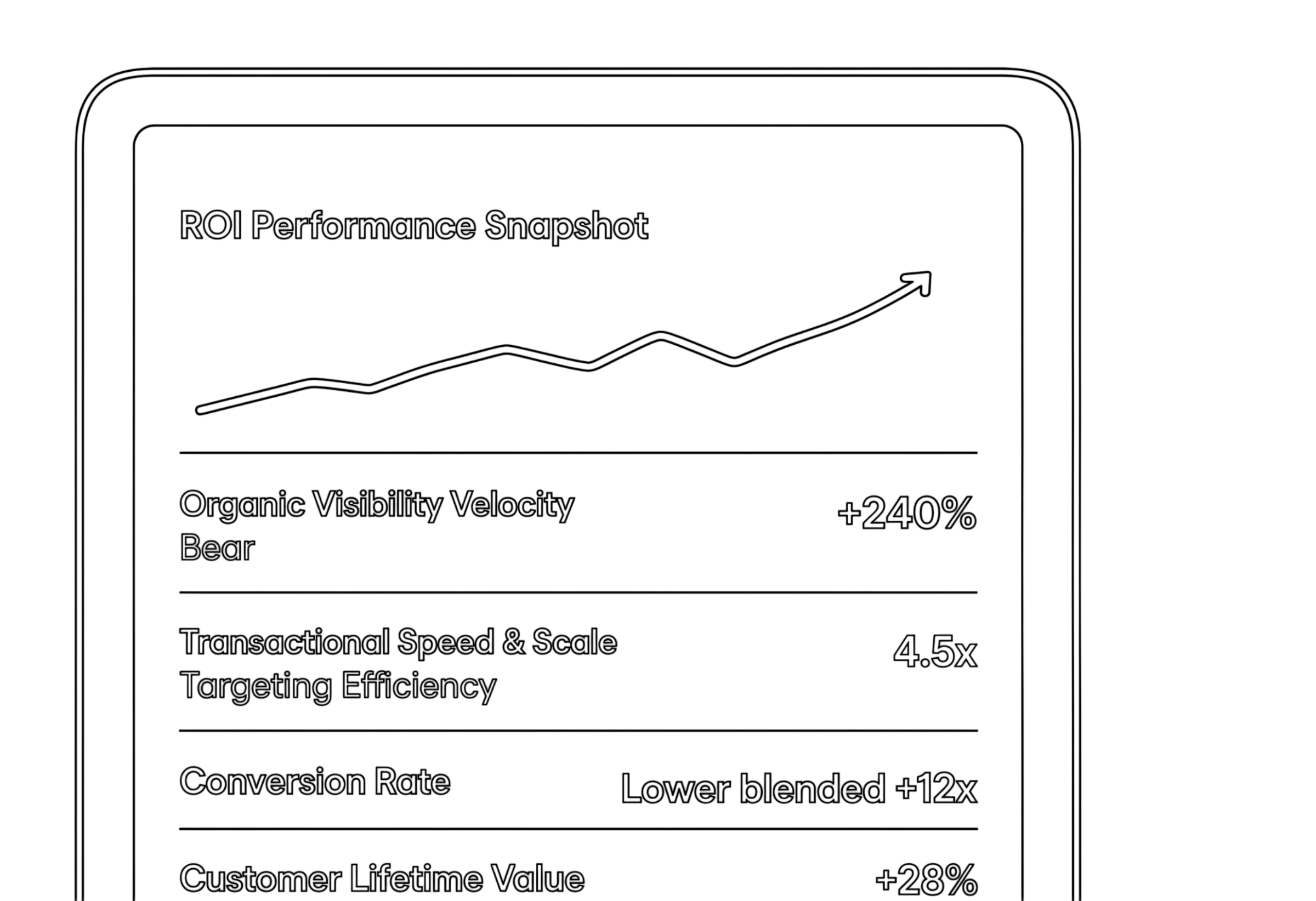
Organic Visibility Velocity: +240%
Lift in organic impressions and high-intent keyword rankings. -
Transactional Speed & Scale: 4.5x
Increase in orders processed with improved conversion rate. -
Absolute Visual & Policy Governance
Enforce brand, content, and policy standards across every SKU and seller.

What Are The Benefits Of All This?
- Lower acquisition friction
- Stronger organic visibility
- Faster transaction loops
- Better policy and seller control
- Higher long-term digital equity
Will This Approach Work For Our Business?
- This isn’t just marketplace cleanup — it’s margin-focused retail optimization.
- Our framework turns fragmented listings into measurable, scalable digital shelf performance.
Have More Questions?
Strategic answers for retail ROI, AEO, compliance, and marketplace growth.
How does Uniform Branding across retail platforms directly lower Customer Acquisition Costs (CAC)?
When your product data, titles, and technical descriptions vary across different platforms, marketplace search algorithms struggle to verify your listings as authoritative sources. This fragmentation splits your organic search rank, forcing you to buy expensive sponsored ads to maintain visibility. Unifying your brand profile consolidates your search signaling, driving down paid dependency and lowering overall customer acquisition costs.
Why have branding policies and legal issues become primary SEO/AEO ranking factors?
Modern e-commerce platforms and conversational AI models optimize for transactional safety and customer retention. Listings linked to trademark conflicts, policy violations, or suspicious seller profiles are classified as high-risk assets by automated crawlers. To protect users, algorithms suppress these listings from premium organic positions, maps, and conversational AI answer results.
What does "reducing the Time to Transact" mean for a business's bottom line?
Time to Transact measures the speed at which a buyer transitions from initial discovery to a finalized checkout. By using AEO to provide instant, precise answers to buyer questions and eliminating platform friction points, you stop users from leaving your funnel to research elsewhere. Faster transactions reduce shopping cart abandonment, optimize your ad-spend yields, and lower operational overhead.
How does reducing the "Time to Transact" lower operational costs?
With 56% of product discovery processes starting directly on retail networks like Amazon, these platforms are no longer just optional wholesale channels—they act as your primary brand front page. Your digital marketing strategy must treat marketplaces with the same level of technical SEO, data structuring, and answer optimization as a traditional corporate homepage.
Can automated metadata management handle complex, multi-variant product lines?
Absolutely. Our real-world data proves that managing extensive catalogs effectively requires automated data orchestration. By building structured metadata patterns that strictly match platform character limits and utilizing advanced sitemap data extraction, we achieved a 240% jump in organic marketplace visibility alongside a 4.5x transaction velocity surge for a major seasonal brand without manual page-by-page friction.