AI Marketing
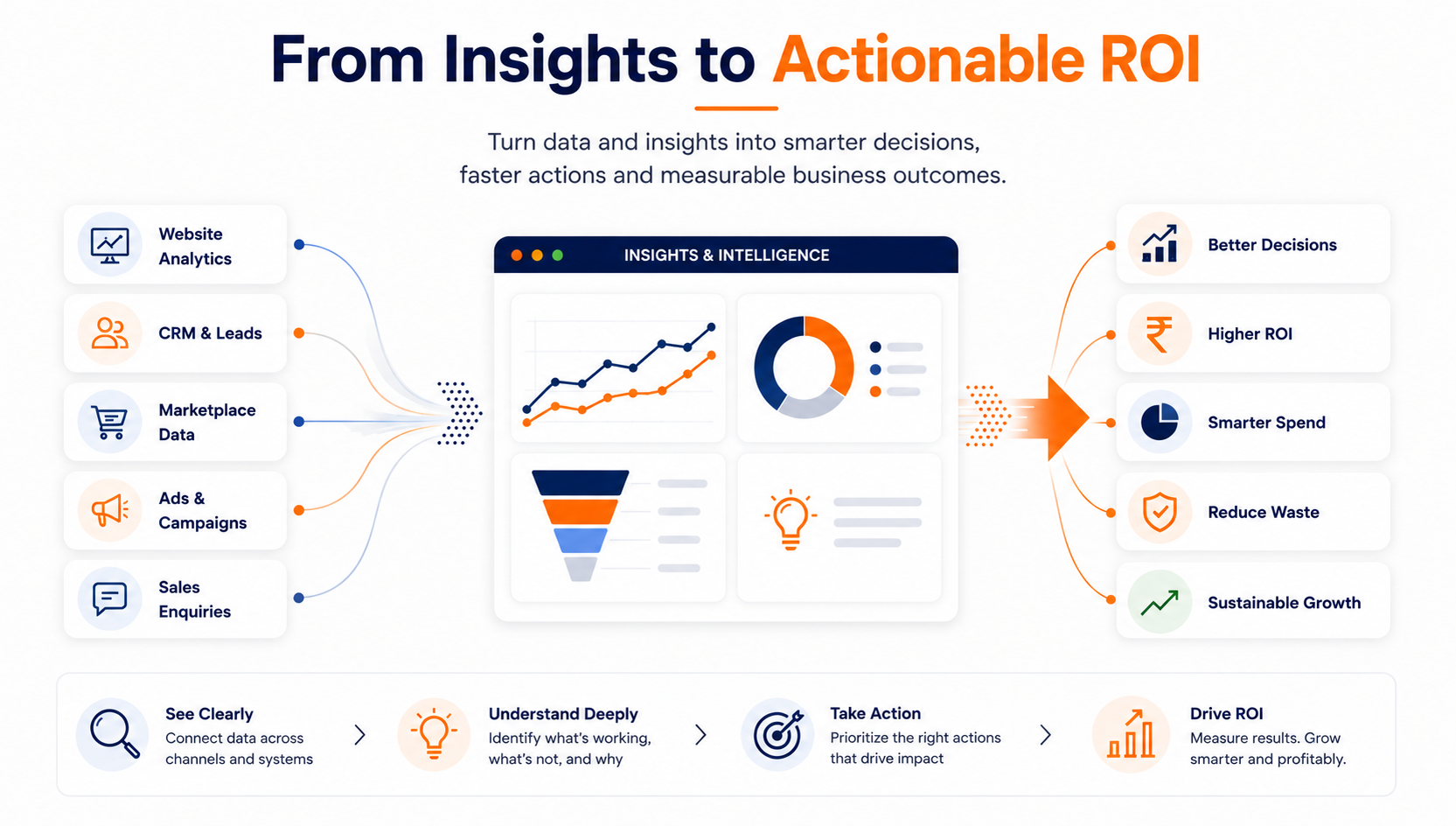
AI Marketing helps your business understand customers, create the right content, optimize campaigns, and drive measurable growth faster and smarter. It brings together AI agents, customer signals, content intelligence, campaign optimization, CRM automation, analytics, and human oversight so your marketing decisions stay sharper and more accountable.
Why AI Marketing Matters Now
Buyer journeys are becoming more complex and dynamic. People discover, compare, evaluate, and decide across search, AI engines, social platforms, email, websites, marketplaces, and direct brand touchpoints. AI Marketing helps businesses connect these interactions, detect opportunities earlier, and respond with better precision.
- Understand customer needs and intent more clearly.
- Respond faster to real-time signals and changing demand.
- Reduce wasted marketing spend and repetitive manual work.
- Improve campaign ROI, customer experience, and business impact.
Traditional Marketing vs AI Marketing
| Traditional Marketing | AI Marketing |
|---|---|
| Works in silos across fragmented channels. | Connects channels, data, content, and intent for seamless experiences. |
| Depends heavily on past behavior and manual research. | Uses real-time user signals and predictive analytics. |
| Creates generic messaging for broad audiences. | Builds dynamic content for different intents and customer journeys. |
| Optimizes after reports are reviewed. | Detects issues and opportunities earlier. |
| Targets large audience groups with limited context. | Micro-targets users based on behavior, context, and engagement. |
| Reports what happened. | Recommends what to do next. |
| Requires more people as workload grows. | Uses AI agents to reduce repetitive execution. |
| Measures clicks and leads. | Connects marketing activity to ROI and business outcomes. |
Latest AI Marketing Trends
The ZYT AI Marketing Model
Signals
Helps the team understand what is changing and where attention is needed
AI Agents
Reduces repetitive work and improves speed across research, content, campaigns, CRM, and analytics.
Human Review
Keeps decisions responsible, accurate, creative, and business-specific.
ROI Benefits
Connects marketing effort to measurable business outcomes.
Benefits for Businesses
Pros and Cons of AI Marketing
| Pros | Risks to Manage |
|---|---|
| Faster research and customer insights. | Poor data can lead to poor recommendations. |
| Better personalization at scale. | Over-automation can ignore brand nuance. |
| Data-driven decisions with more clarity. | AI may misread context without human oversight. |
| Better lead scoring and nurturing. | Privacy and compliance risks must be managed. |
| More content and creative testing. | Over-reliance on AI can reduce creativity. |
| Better ROI tracking and business alignment. | Teams may trust automation before validating outputs. |
| Reduced operational overhead work. | Costs can rise if tools are added without a clear roadmap. |
AI Marketing Readiness Checklist
Evaluate your strategy, data, technology, and teams to see if your marketing is ready for AI adoption.
AI Processes and Tools
| Process | Purpose | Example Tools |
|---|---|---|
| Research & Discovery | Market trends, competitor analysis, audience questions, persona research, and customer insights. | ChatGPT, Gemini, Perplexity |
| Content & Creation | Blogs, landing pages, advertisements, social media posts, emails, and video content ideas. | Jasper, Writesonic, Copy.ai |
| Data & Lists | Account segmentation, lead scoring, behavior tracking, and customer data enrichment. | Surfer SEO, Semrush, MarketMuse |
| CRM & Automation | Lead workflows, automated follow-ups, nurturing campaigns, and customer lifecycle management. | HubSpot, Salesforce Marketing Cloud, Adobe Experience Cloud |
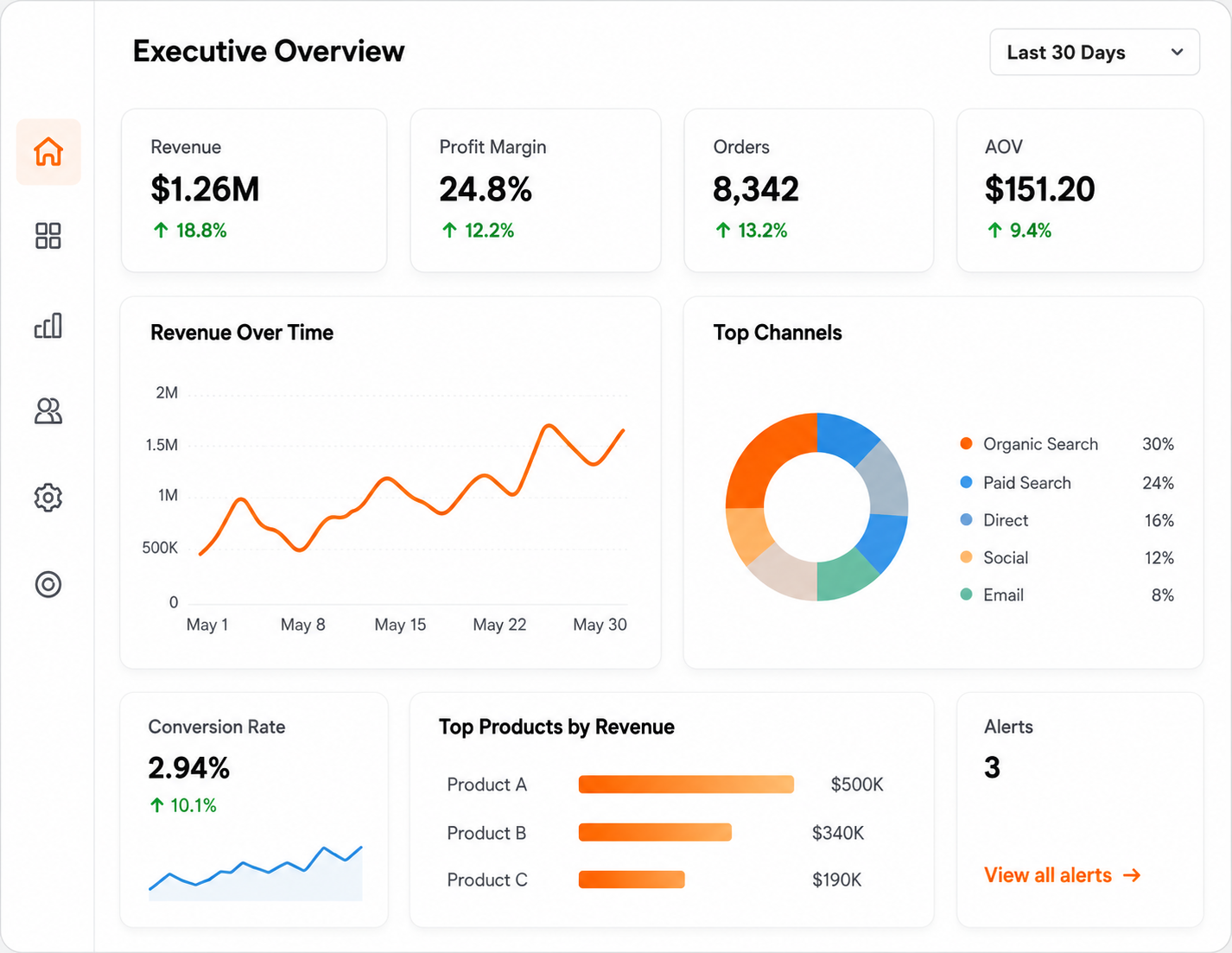
| Analytics & Insights | Performance analysis, campaign reporting, dashboards, and AI-powered recommendations. | GA4, Looker Studio, Tableau |
| Campaign Optimization | Budget allocation, ad testing, audience targeting, bid optimization, and campaign improvements. | Google Ads AI, Meta Advantage+, Performance Max |
| AI Personalization | Dynamic content, personalized messaging, product recommendations, and tailored customer journeys. | Dynamic Yield, Optimizely, Adobe Target |
| Workflow Automation | Task routing, approvals, reporting workflows, and AI-assisted operational automation. | Zapier, Make, n8n |
AI Marketing FAQs
What is AI Marketing?
AI Marketing uses artificial intelligence to support research, content planning, personalization, campaign optimization, automation, analytics, and marketing decision-making.
How can AI improve our marketing ROI?
AI can help identify better audiences, reduce wasted spend, personalize customer journeys, test more ideas, and connect marketing activity to measurable business outcomes.
Do we need AI tools or a full AI strategy first?
Most businesses should start with strategy, data readiness, and use-case mapping before adding tools. Tools work better when the marketing foundation is clear.
How do you keep Human in Control?
Human experts review AI recommendations, approve messaging, validate data, and make final decisions around brand, budget, compliance, and customer experience.
Which AI marketing tasks should we automate first?
Start with repetitive, measurable tasks such as research summaries, content briefs, reporting, campaign monitoring, lead scoring, and follow-up workflows.
Can AI Marketing help B2B and D2C brands?
Yes. B2B can use AI for lead quality, account-based targeting, and CRM intelligence. D2C can use AI for personalization, retention, product recommendations, and customer journeys.