The Future of eCommerce
Connect.
Personalize.
Deliver.
Delighted.
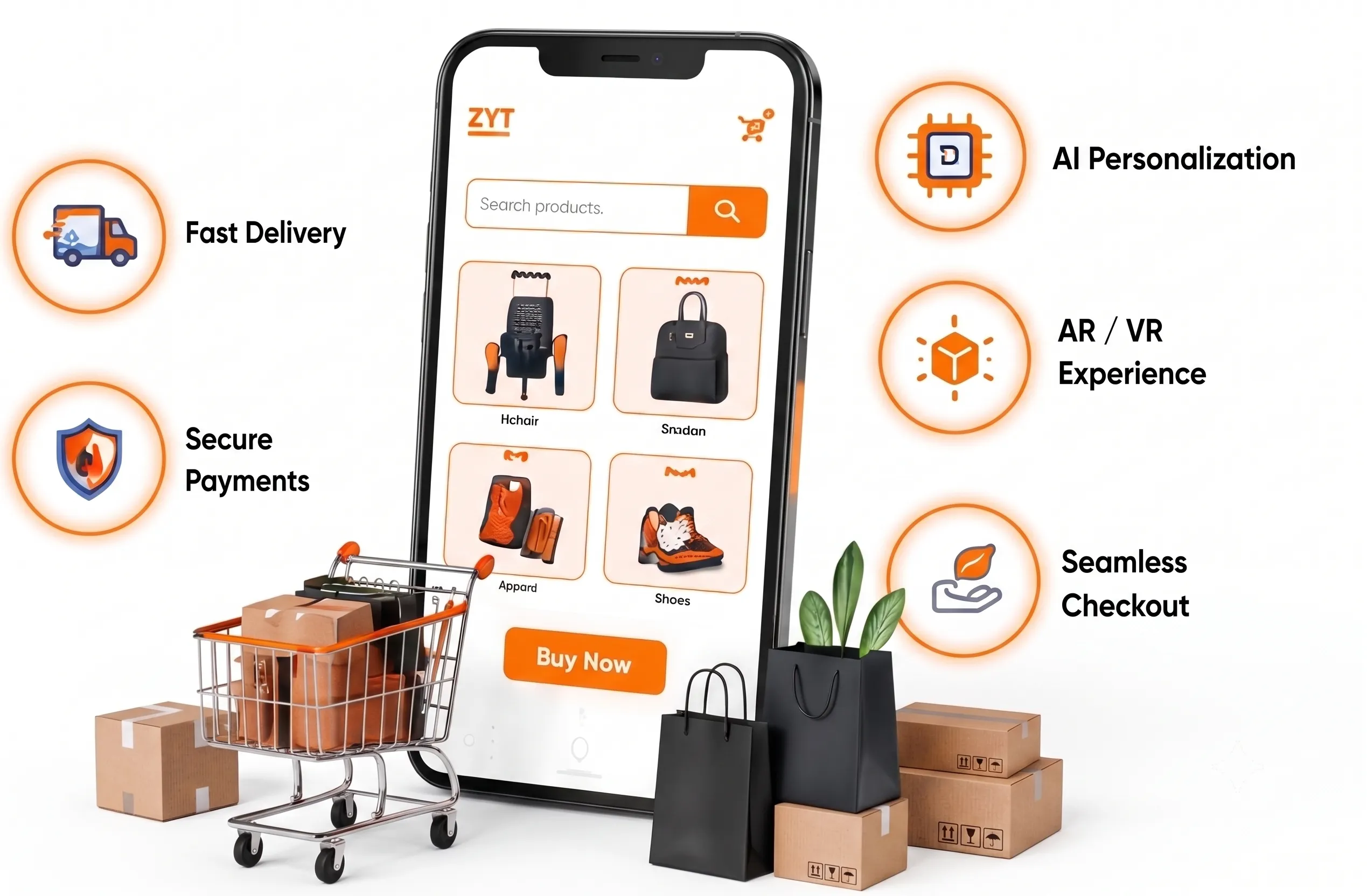
eCommerce is evolving faster than ever. It’s driving personalization, real-time commerce, smarter inventory, experiences, and seamless operations across touchpoints to delight customer loyalty.
Connect. Personalize. Deliver. Delighted.
eCommerce is evolving faster than ever. It’s driving personalization, real-time commerce, smarter inventory, experiences, and seamless operations across touchpoints to delight customer loyalty.
Future-ready solutions built to speed, scale, and maximize customer value
eCommerce Market By 2030
India eCommerce Market
India Quick Commerce
Global eCommerce Market Size
Global eCommerce Market CAGR
Global Cart Abandonment Rate
Personalized Shopping
How eCommerce is Evolving?
Omnichannel Commerce
Seamless, unified experiences across web, app, social, marketplaces, and in-store.
AI-Powered
Discovery
Smarter search, recommendations, and personalized content that convert.

Personalized Experiences
Tailored journeys and dynamic offers that build loyalty and trust.

Quick
Commerce & QSP
Speed, convenience, and real-time fulfillment drive satisfaction.
Trust &
Sustainability
Ethical brands, trusted payments, and green practices win customers.

B2C, D2C & B2B
Three Different eCommerce Futures
B2C eCommerce
- Mass customer reach
- Personalized recommendations
- Seamless omnichannel
- Subscription & loyalty models
D2C eCommerce
- Own brand storytelling
- Direct customer relationships
- Higher margins, better data
- Flexibility & innovation
B2B eCommerce
- Self-service ordering
- Bulk pricing & automation
- Streamlined procurement
- ERP / CRM integrations
eCommerce SWOT The 2030 View
Strengths
- Global market access – 24/7
- Data-driven customer insights
- Operational efficiency at scale
- Automation & AI adoption
- Scalability & flexible models
- Wide product selection
- Convenience & speed
Weaknesses
- High customer acquisition costs
- Dependence on third-party platforms
- Logistics & last-mile challenges
- Data privacy & security concerns
- Cart abandonment
- Payment complexity
- Returns & refund management
Opportunities
- Rise of social commerce
- AI/ML personalization at every touchpoint
- Cross-border & emerging markets
- Sustainability & eco-friendly brands
- AR / VR for immersive shopping
- Subscription & recurring revenues
- Voice & conversational commerce
Threats
- Intense competition – local & global
- Ad fatigue & rising CAC
- Cybersecurity & fraud risks
- Supply chain volatility
- Economic uncertainty & inflation
- Changing customer expectations
- Regulatory & tax challenges
Key Areas to Focus On
Risks and Challenges to Monitor
Cybersecurity Threats
Protect customer data, prevent fraud, ensure secure transactions.
Regulatory & Compliance
Stay compliant with laws, tax regulations, and data policies.
Supply Chain Disruptions
Manage inventory, logistics risks, and supplier dependencies.
Market Saturation
Stand out with unique value, experiences, and innovation.
Operational Risks
Ensure platform uptime, return handling, and system reliability.
The eCommerce 2030 Readiness Model
2030Readiness Model
Understand your market, customers, and business objectives.
Create a technology roadmap and operating model.
Use data, AI, and automation.
Measure and optimize continuously.
Lead, adapt, and grow tomorrow.
The Future is now.
Your eComm Advantage Starts Today.
The Future is now. Your eComm Advantage Starts Today.
eCommerce FAQs
How is eCommerce evolving across the next 5 years?
eCommerce is moving from simple online selling to connected commerce. Buyers now discover, compare, trust, buy, return, and reorder across websites, marketplaces, social platforms, AI engines, apps, and direct brand channels.
Why should businesses prepare their eCommerce strategy for 2030?
Because buyer expectations are changing fast. Businesses need to prepare for AI-assisted discovery, personalization, faster fulfillment, direct customer relationships, immersive product experiences, and profitability-focused commerce.
What is the difference between B2C, D2C, and B2B eCommerce?
B2C focuses on selling efficiently to individual consumers. D2C focuses on building direct brand relationships with customers. B2B eCommerce supports business buyers with account pricing, bulk orders, quotations, repeat ordering, and CRM/ERP integration.
Is eCommerce only about having an online store?
No. A future-ready eCommerce system includes product discovery, content, personalization, payment, logistics, returns, customer support, loyalty, reviews, analytics, and platform integration.
Why is AI important in eCommerce?
AI can support product recommendations, search personalization, dynamic pricing, inventory planning, customer support, fraud detection, product sorting, and AI-assisted buyer discovery.