AI Search
For years, digital marketers have navigated a landscape that is perpetually shifting, led by a fragmented toolset and rising complexity. But Agentic AI offers a different promise. It is not a shift but a re-engineering of the entire customer experience supply chain. The goal: Customer experience orchestration.
One company that is defining the role of Agentic AI in digital marketing is Adobe. In a recent discussion in the Philippines that saw executives from Malayan Insurance, Meralco, Tonik, and PLDT, Ming Fai Chak, Adobe’s head of solution consulting for Asia, laid out the company’s vision. The discussion, held under Chatham House rule and joined by Duncan Egan, Adobe’s vice president of enterprise marketing for APAC and Japan, positioned Agentic AI not as a replacement for human creativity but as the essential conductor for scaling personalized growth.
Adobe’s approach distinguishes three key types of AI:
Chak notes that Agentic AI, specifically the Adobe Experience Platform Agents, is built on three core pillars: Content, data, and journeys. The Agent Orchestrator layer is what enables the deployment of multiple, purpose-built agents to work together seamlessly. Adobe has delivered 11 of its own agents, including the already live Data Insights Agent and Journey Agent.
Watch Duncan Egan explain what Agentic AI means to the future of digital marketing.
Duncan Egan crystallized the function of an agent with a powerful example: the Journey Agent.
“It will make real-time decisions on a campaign,” Egan explained. “It might swap out imagery, it might change headlines of assets that have been created already to optimize the outcome of that campaign… It is all the time looking at how I can, when I have enough data, optimize this campaign for the outcome that I’m looking for?”
The value proposition is clear: smart workflow automation. It frees marketing teams from being on call at 2:00 AM, constantly monitoring and manually adjusting campaigns.
Agentic AI’s ability to act on data in the moment facilitates Hyper Personalization and Optimized Journeys, ensuring every customer interaction is intent-driven and deeply tailored, something previously impossible at massive scale.
A critical insight from Chak is that Agentic AI empowers marketers by removing the “sludge work”. More importantly, it looks to elevate the human element.
In the demo of Brand Concierge, a new AI-native application, the goal-driven nature was front and center. The system dives into data and content to find insights and opportunities. But significantly, it presents the marketer with data and options, keeping the decision-making authority human.
This agility enables rapid, data-driven strategic innovation and experimentation. Chak gave a common use case: running experiments quickly when customers download an app but don’t open it after 7 or 14 days. With agents, marketers can pivot and test variations almost instantly to boost engagement.
This is the essence of making marketers more efficient and effective. It transforms the team into a strategic decision-making unit focused on creativity, differentiation, and growth.
Learn how agentic AI can be a force multiplier for CX and digital marketing.
The rise of autonomous agents naturally raises questions about the future of agency partners. The question in participants’ minds was whether Agentic AI would eliminate their need for it.
Both Adobe executives were quick to frame this as an evolution rather than an obsolescence. Agencies remain a critical constituent base and a vital partner. But their value is now being recalibrated:
Conversely, what marketing teams should pull in-house are the tasks the new AI tools can automate cheaply and instantly.
“We’re probably not going to ask an agency to resize an ad; I can do that,” noted Egan. Similarly, tasks like translation are now easily handled by internal tools.
Meanwhile, for agencies themselves, the conversation has changed as well. Adobe’s partners are using solutions like these to lower their costs and remain price competitive, ensuring they can deliver the same value without needing to hire as many expensive creative directors for routine tasks.
A massive, urgent challenge for CMOs, particularly in markets like the Philippines, where digital adoption is high, is the impending discoverability crisis driven by Large Language Models (LLMs).
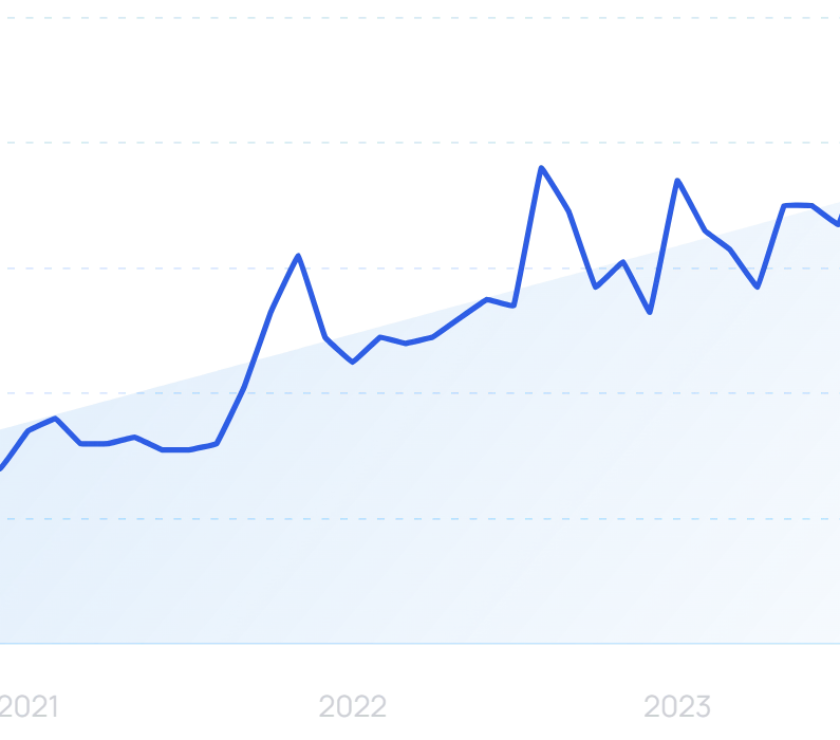
The figures are striking:
When a consumer uses an AI chatbot (like Gemini or ChatGPT) to ask, “Where should I go for vacation?” they get a summary answer and may never visit a brand’s website. The challenge is: Will your brand show up?.
To tackle this, Adobe is launching Adobe LLM Optimizer. This tool addresses what they term Generated Engine Optimization.
Egan emphasized the new mandate: marketers now need to build their websites for bots. The LLM Optimizer gives visibility into:
Marketers must ensure their content is adaptive, structured, brand-safe, and discoverable across all channels, including app, social, and AI search. This goes beyond optimizing web content to include blog posts and the social media presence, as LLMs increasingly use a combination of sources.
In today’s AI-native world, video generation tools are becoming incredibly realistic. This has made trust and authenticity paramount for brands. For markets like the Philippines, content provenance is critical.
Ravi Verma, country head for Adobe Digital Experience for Southeast Asia at Adobe, highlighted the company’s Content Authenticity initiative. This is achieved through a consortium (the Content Authenticity Initiative) that works to create a “nutrition label for content”.
This system embeds content provenance deep in the code. If AI creates a video or if a photo is edited in Photoshop, the system tracks and captures every modification. This transparency allows end users and brands to authenticate the content they view. Adobe’s Firefly generative AI, for example, is trained on rights-managed content, ensuring anything created is commercially viable. This is a huge differentiator from public models.
For large, regulated enterprises, the need for governance is baked into Adobe’s systems, with workflows to secure legal and regulatory clearances before content is deployed.
The discussion circled back to the fundamental change in interaction: the shift toward a conversational UI.
Adobe’s Brand Concierge demonstrated this by letting a consumer interact using natural, multimodal language (“I want a multi-generation family trip activities and tours in Barcelona”) to receive personalized offers, all created in real time, without the need for traditional website development.
This is the end state of Agentic AI: an ecosystem where every channel, whether it is a website, app, email, SMS, or Facebook Messenger (as is crucial in the Philippines), is simply a vehicle to deliver the right, highly personalized content orchestrated by intelligent agents.
Adobe’s own internal B2B marketing has fully embraced this, moving away from linear, manual lead scoring to focusing on buying groups and using AI to identify the “recipes” of engagement that indicate genuine interest, optimizing sales team time and marketing spend. Enterprises that fail to invest now risk losing customers to competitors already delivering autonomous, personalized experiences, with Agentic AI as their backbone.
Looking for AI strategy insights for 2026? Watch Duncan Egan uncover those that matter for today’s CMOs.
Image credit: iStockphoto/Varijanta
Winston Thomas is the editor-in-chief of CDOTrends. He likes to piece together the weird and wondering tech puzzle for readers and identify groundbreaking business models led by tech while waiting for the singularity.
Copyright ©2018 – 2026 CDOTrends. All Rights Reserved.