
AI Search
You are here: Influencer Marketing Hub » Digital Marketing »
Local SEO rewards the businesses that nail the fundamentals and quietly punishes the ones that cut corners – and the playbook keeps shifting as AI changes how people search.
To cut through the noise, I sat down with Bill Ross, a 20-year SEO veteran and strategist for some of the largest global brands, for a candid Q&A on what actually drives results for local businesses today.
His advice spans Google Business Profiles, citations, local links, and reviews, with a consistent focus on real conversions over vanity metrics and the growing pull of conversational, AI-driven search.
The charts throughout add data to his read on where local search is heading next.
Ryan: Can you walk me through how you’d approach local SEO for a business that’s brand new and has no online presence yet?
Bill: As with any marketing tactic, it’s not always difficult to do, but it can be time-consuming, and knowing what not to do is more important than knowing what to do.
Get great at the basics below before getting advanced.
Ryan: How do you decide which citations are worth your time and effort when you’ve got limited resources?
Bill: It comes down to strategy – making sure any citation you go after is worth your time and the value it provides. Tools like Moz Local can handle the boilerplate citations every business needs. Beyond those, the citations worth pursuing depend on both your geographic target and the industry you’re in.
Ryan: When it comes to local link building, how do you prioritize which opportunities to pursue first?
Bill: The key is getting on sites that are about or located in your geographic area. Local publications are great – newspapers, TV, and radio station websites with a link back. Local interviews are great too. Anything that’s either industry-specific or highly authoritative is what I’d go after.
Ryan: How do you actually go about pitching yourself or your business to these local publications to get that coverage and those links?
Bill: This is the big challenge. A lot of businesses think they’re unique, and some are. But what you really want to think about is the angle you’re taking on a problem from, and the solution you provide.
Whatever you’re pitching has to be genuinely worthy of being published, talked about on the news, or mentioned in a local publication. If it’s not, you might as well do a $99 press release through a press release service – which, honestly, doesn’t move the needle much at all.
It all comes down to whether you have something worth talking about, worth mentioning, worth being interviewed for. If you don’t, I’d rethink your positioning in the market.
Ryan: What metrics do you track to measure whether your local SEO efforts are actually paying off for a business?
Bill: There are a lot of metrics, and many are directional – traffic, rankings, and so on. But what you’re really looking for is conversions. That could be a lead form submission, a newsletter signup, a phone call – whatever it is, you need to be able to track it and tie it back to a real action.
Those are different from vanity metrics like rankings, traffic, views, or likes. Vanity metrics matter from a directional standpoint and can show that your content or messaging has value, but they shouldn’t be the ultimate goal of a campaign.
You can pull a lot from Google Analytics and Google Search Console. But I’d focus on the data directly from your Google Business Profile. It can provide basic data such as calls from someone clicking your phone number, bookings, people who looked for directions to your business, and website clicks.
And, most people don’t know that if you scroll down in the Business Profile Analytics, you can see the keywords people searched when your business showed up.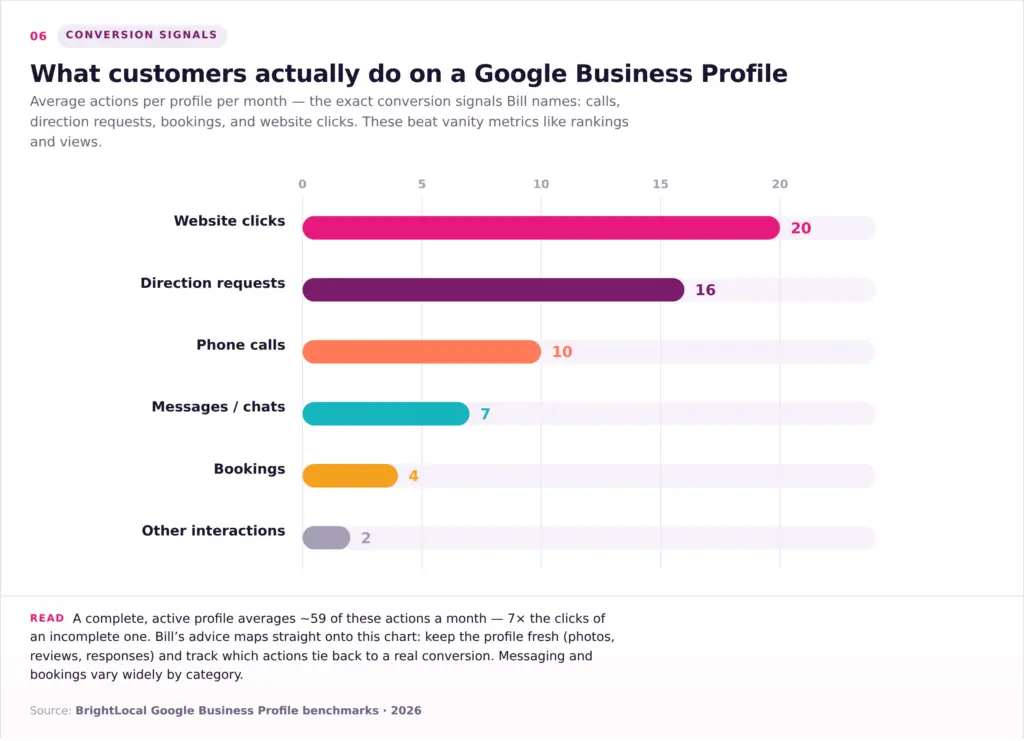
The most important thing is to bucket all of these correctly into conversion, brand-building, reach, or directional metrics.
Ryan: What’s the biggest mistake you see businesses making with their local SEO efforts?
Bill: I don’t think there’s one big mistake – it’s a lot of little ones.
One of the biggest mistakes is not what most would consider a traditional SEO focus, even though it should be – the experience they provide and consistency across all customer touchpoints.
For example, you can earn rankings, but if the user lands on a poorly designed website with weak content or calls you and doesn’t feel like you’re trying to help them, or your offline and online experiences don’t match, then they lose trust.
Over time, that erodes your rankings because bounce rates are high, click-throughs from search results become lower, and therefore Google stops recommending you within their search results.
Ryan: What’s your approach to helping a business recover if they’ve already damaged their local SEO with past mistakes?
Bill: The big thing is understanding what they’ve already done. Once you know that, you can act.
Ryan: How do you approach local SEO differently for a service-based business versus a location-based business like a restaurant or retail store?
Bill: A service-based business uses a lot of the same strategies as a local location-based business. The hard part is that they usually don’t have a location customers visit, which is one of the main signals Google uses to rank a business for a geographic area.
Two major things that we see in service-based businesses that can address them not ranking well or getting phone calls include:
Google Business Profile Updates
A common mistake is letting the Google Business Profile go dormant. It needs fresh photos, new reviews, and responses to those reviews – everything that tells Google, “I’m a real business doing work in this area.” There are specific tactics here:
Website Location Pages Sit Dormant
Add local service location pages to your website to house location-specific images and reviews specific to the location -but without going crazy. Don’t target every neighborhood and city under the sun; that gets out of control and, from what we’ve tested, can actually hurt you.
Ryan: How do you know when a business is ready to expand to targeting additional geographic markets with their local SEO?
Bill: You can target additional markets once you have proof that you actually do work in them. It’s easy to put the cart before the horse here. You have to have the proof first – you have to do the work and prove it before you start targeting the area.
Ryan: When you’re working with a client, how often do you revisit and adjust your local SEO strategy?
Bill: Typically, we review data monthly and adjust quarterly. We use the data to better understand what’s working and what’s not, and then revise based on feedback.
A couple of challenges we come up against are, first, when there is enough data to provide a relevant insight. This makes being agile and adjusting strategies more difficult.
Secondly, many clients don’t have the budget to engage with us to do this effectively. So one of the things we do is provide a checklist to those clients, and then they can do it themselves on a bi-monthly or quarterly basis.
The most important thing is to be agile and fluid in your strategies because not everything works the same way for all businesses, and there is no silver bullet.
Ryan: How do you balance optimizing for voice search and featured snippets in a local SEO strategy?
Bill: For voice search, featured snippets, and anything driven by natural language, you have to optimize for how people actually talk and the words they use. Don’t get bogged down in industry jargon, because normal people don’t talk that way. They talk about problems that affect them.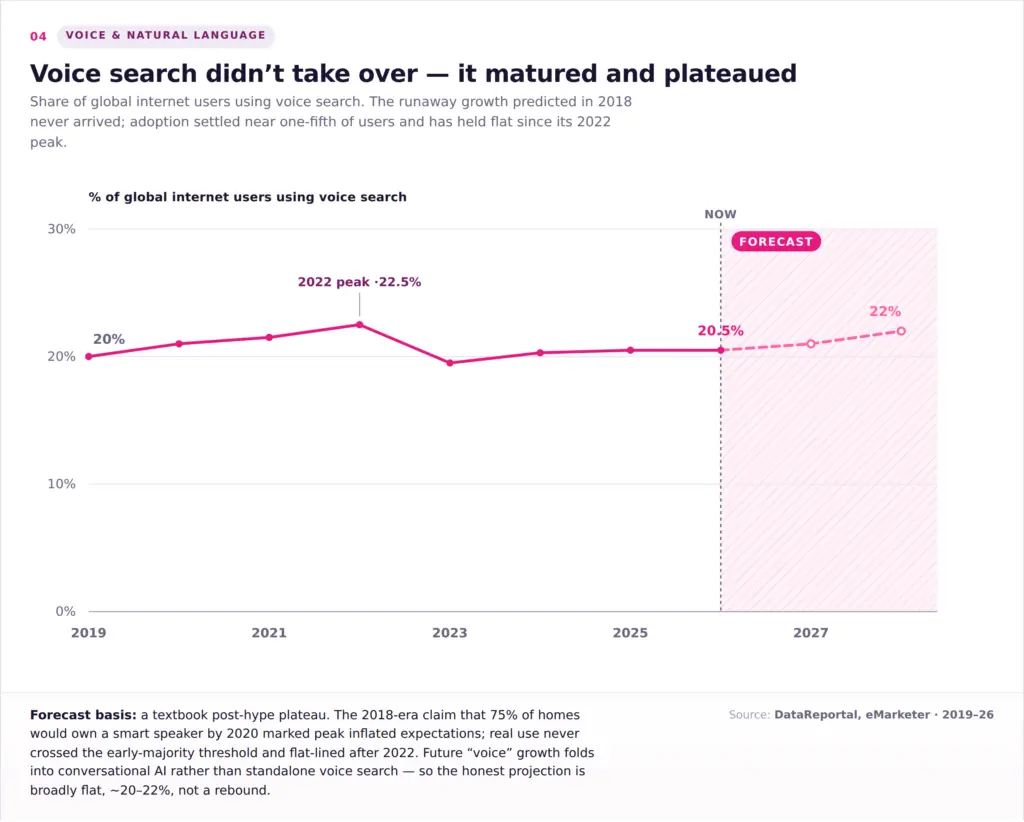
Someone won’t search the technical specs of a new HVAC system – they’ll say, “My HVAC system isn’t working; it’s hot upstairs but cool downstairs.” That’s how real people talk, and that’s the kind of content your website should have.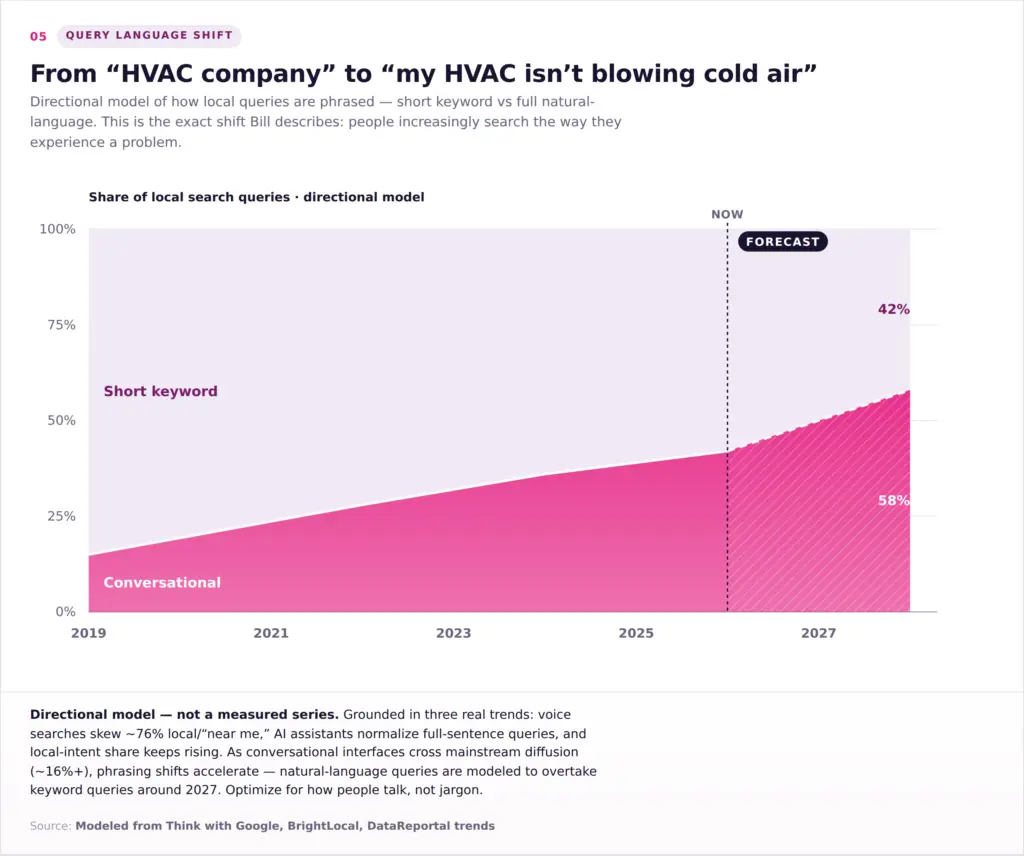
Ryan: What role does review management play in your overall local SEO strategy, and how much time should a business actually spend on it?
Bill: Reviews are very important, but the challenge is that many businesses collect generic ones – “great job,” “the food was great.” and also don’t engage with them. These two things provide no value to a user, and therefore very little to Google.
Good review management means 2 things: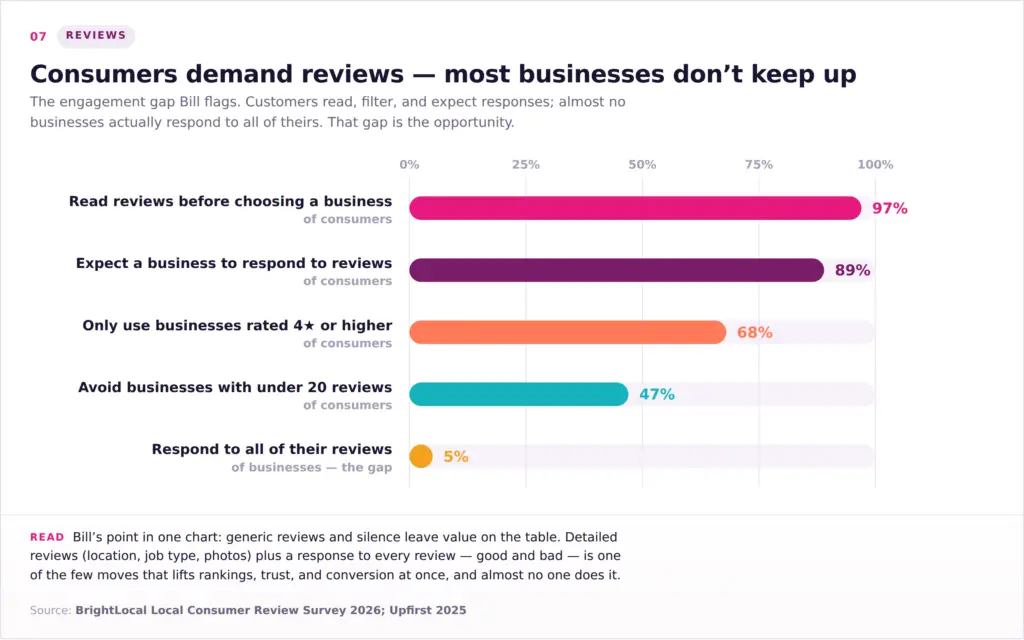
Ryan: As local SEO evolves, what trends are you watching that you think will shape the strategy going forward?
Bill: AI is obviously going to shape it.
For local SEO specifically, I think it moves away from the map pack and toward a more conversational way of expressing what’s needed. Fewer people will search “HVAC company,” and more will search the way they experience the real world – “my HVAC system is making a noise” or “my system stopped blowing cold air” – and they’ll increasingly use AI tools to find businesses and answers.
The catch is that those AI systems have to pull their data from somewhere, and they’re pulling from Google and other search engines’ results. They’re compiling that information into a more concise, conversational format – which means local SEO doesn’t go away; it feeds those AI systems.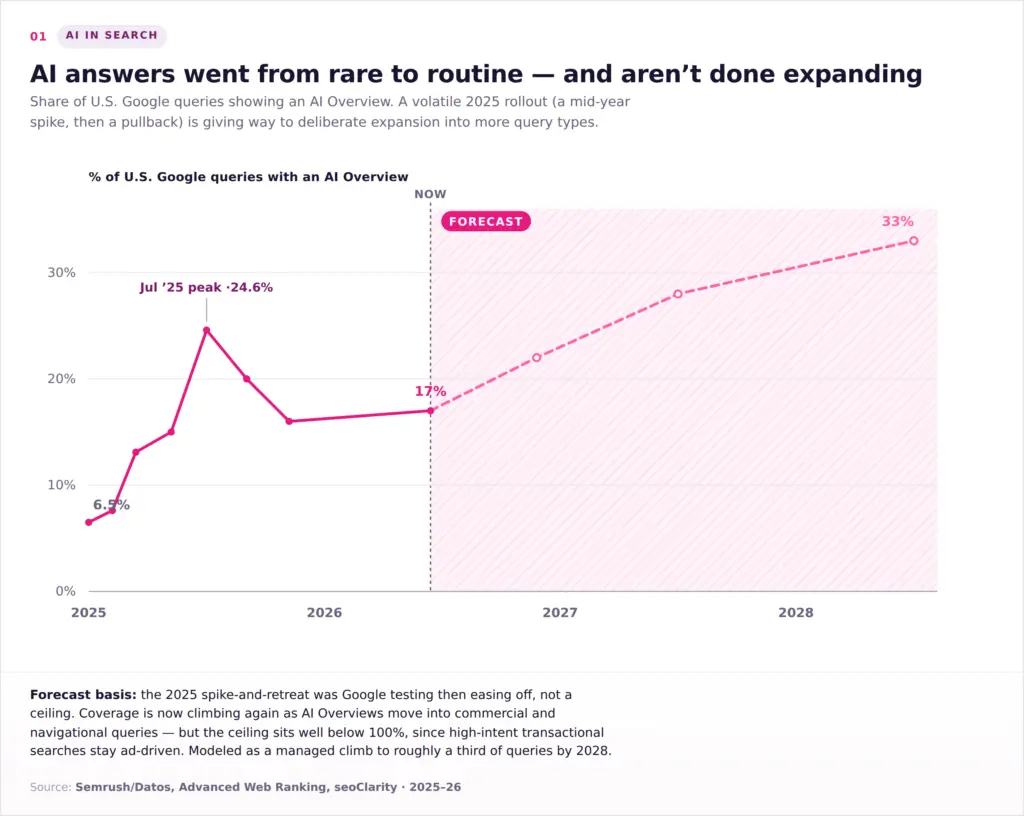
Beyond that, authenticity and brand building always win. You have to build the brand and an experience that stands out, so you’re top of mind when customers search.
You have to build local content that addresses real questions and problems and offers solutions – not just generic “what is an HVAC system” content, but real answers that prove you know your stuff.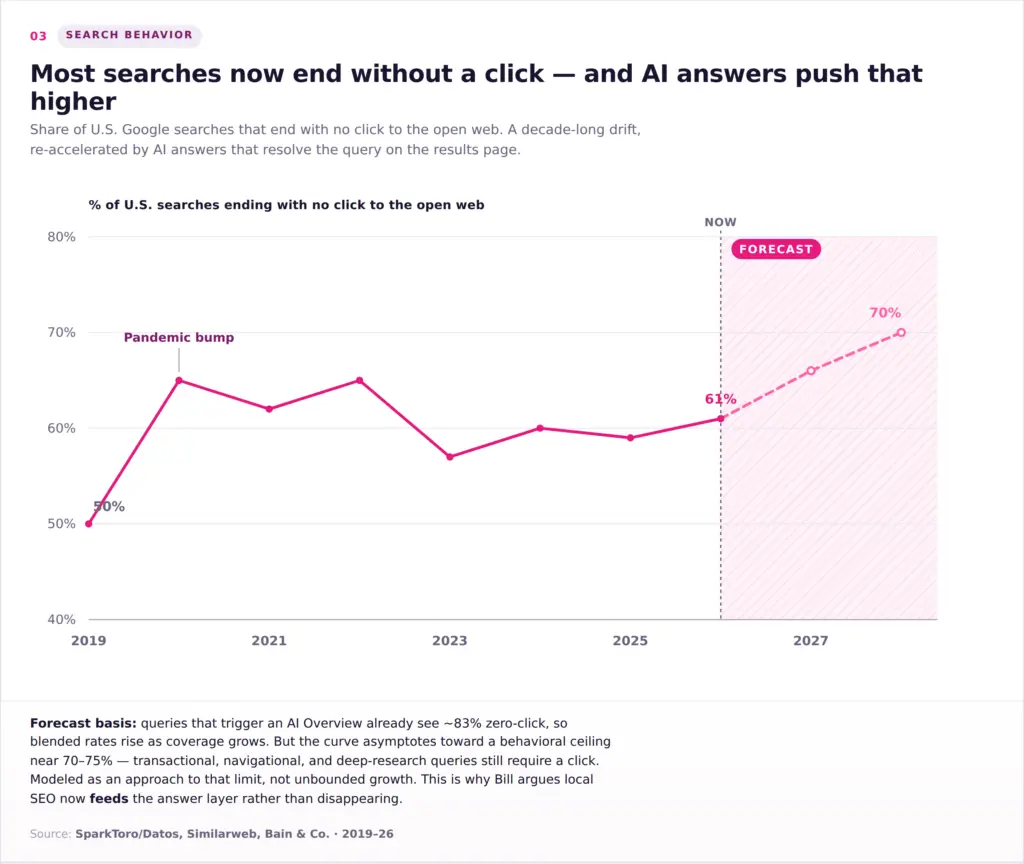
That about wraps up the questions we have for Bill. As always, you can learn more about Bill’s agency Emulent Digital Marketing or find him on Instagram and Linkedin if you have additional questions about Local SEO or where its heading in the future.
Bill Emulent’s founder and lead SEO has been helping companies increase their traffic…
Get cited and mentioned in AI search. Learn the SEO strategy helping brands appear in…
Join 100,000+ marketing professionals getting the latest insights delivered to their inbox, plus hot takes from IMH’s CEO, Ryan Hilliard.