AI Search
Even when using the same apartment platform, the information required by residents varies from complex to complex. As the number of complexes increases—ranging from surrounding commercial areas, school districts, and transportation environments to weather and lifestyle zones—the manpower and costs required to manually produce region-specific content also rise. NNT and Samsung C&T have embarked on a pilot project to automate this process using AI. This approach combines complex and regional data to generate lifestyle information, connecting verification, publication, and improvements based on user feedback into a single pipeline.
NNT, an AI marketing engineering company, is conducting a proof of concept (PoC) for Samsung C&T Construction Division's residential lifestyle platform 'Homeniq' to build a pipeline for the automatic generation and publication of AI-based, customized content for residential complexes.
Homenic is a residential platform that provides apartment management, IoT device control, and local lifestyle information for the surrounding area. NNT is verifying a method to reduce the operational burden of individually producing content tailored to each location, population composition, and surrounding infrastructure—as the number of complexes using Homenic increases—through AI automation.
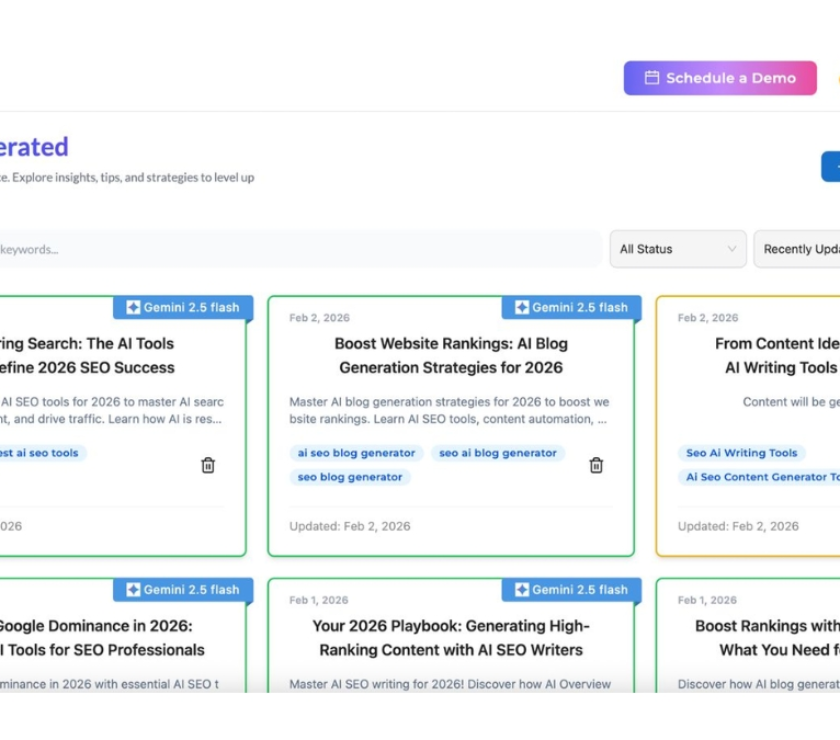
The core is a pipeline connecting 'Programmatic Content Generation' with multiple Large Language Models (LLMs). It is a structure that combines the physical attributes of a complex with lifestyle data such as local commercial areas, school districts, transportation, and weather, and automatically generates complex-specific content based on this.
Unlike the method of simply requesting content creation from LLM, it is designed to repeatedly generate content needed for various complexes based on data and templates. Through this PoC, NNT is verifying whether this can reduce the additional manpower and operational burden required for content production as the number of applied complexes increases.
Following content creation, a review stage follows. NNT has combined AI automated review tools with human editor reviews in a pipeline that links multiple LLMs. This structure is designed to reduce inaccurate information and quality issues that can arise from generative AI, and to provide content tailored to Homenic's brand standards and resident types.
User responses after publication are also utilized in the generation process. A closed-loop optimization method is applied, which feeds data such as content dwell time and click-through rates back into a pipeline to adjust the prompts used for subsequent content creation.
The company explained that, as a principle, it uses anonymized and aggregated information for data processing. This PoC verifies whether content creation, as well as verification, publishing, and improvement processes utilizing user feedback, can be operated as a single automated pipeline.
NNT and Samsung C&T plan to introduce automatically generated content to pilot complexes within the year and sequentially expand the service to other complexes based on the results of the demonstration. Currently, it is not a commercial service introduced to all Homenic-enabled complexes, but rather a demonstration phase for pilot application.
Yoon Sung-joon, Co-CEO (CTO) of NNT, stated, “The goal of this PoC is to verify a structure where an AI system, rather than a human, consistently generates reasons for residents to open Homenic every day,” adding, “We will build a marketing AI pipeline with Samsung C&T that operates precisely even in a large-scale platform app environment.”
NNT builds corporate data infrastructure and marketing systems based on its proprietary agentic AI solutions. According to the company, it has carried out over 350 projects, including those for Samsung Electronics and Hyundai Motor Company.
Copyright © VENTURESQUARE. All Rights Reserved.
You must be logged in to post a comment.